Key Takeaways:
- Seasoning is the foundation of carbon steel’s natural nonstick performance—it’s a scientific process that creates a bonded, protective layer.
- You don’t need to re-season after every use. Just clean with hot water, dry thoroughly, and lightly oil the pan to prevent rust.
- Re-season only when necessary, such as when food sticks, after cooking acidic dishes, or when the seasoning appears worn or rust develops.
- Use high smoke point oils like avocado, grapeseed, or sunflower oil for seasoning. Avoid extra virgin olive oil due to its low smoke point.
- Choose stovetop or oven seasoning based on your specific de Buyer pan model. Some are not oven-safe, so check before baking.
There’s nothing quite like cooking with carbon steel. It’s naturally nonstick, ultra-durable, and built to improve with use. The only hiccup is that it requires seasoning for proper maintenance. The good news is that you don’t need to fully re-season after every use.
This article will cover when you do need to re-season, how to maintain seasoning, and what oil to use.
Why Proper Seasoning Matters
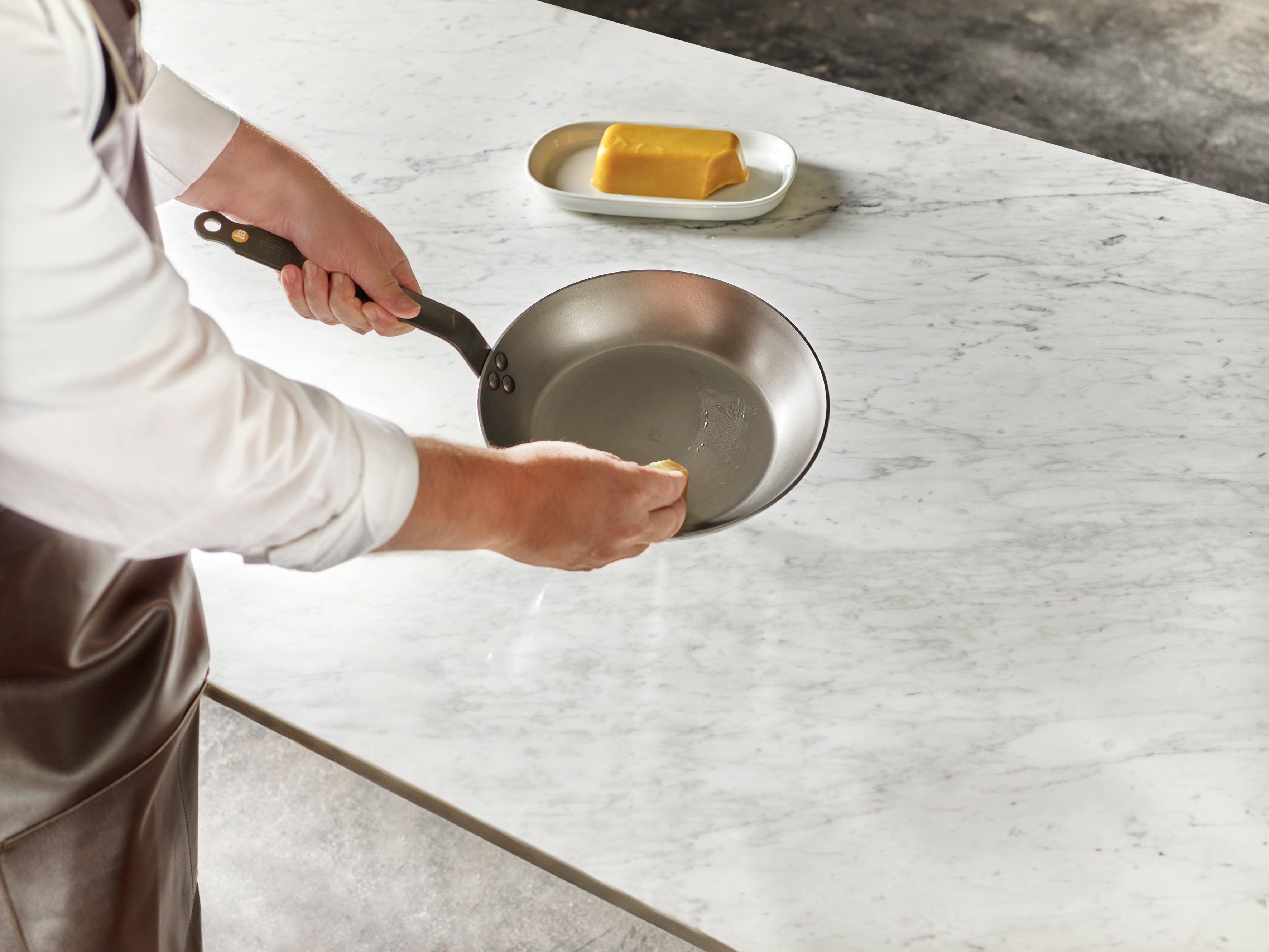
Seasoning isn’t magic, it’s science. It involves applying a small amount of oil or fat to the pan and heating it until it polymerizes. In this process, the oil molecules react to the heat and bond into larger structures, forming a thin, protective layer of polymerized oil that helps prevent rust and creates natural nonstick properties.
So, contrary to popular belief, seasoning isn’t a coating that flakes off—it’s a bonded surface transformation. Seasoning forms a natural nonstick barrier that improves with every use. The benefits of proper seasoning make it a must for your carbon steel pan:
- Prevents food from sticking
- Protects against rust and corrosion
- Enhances flavor development through better browning and searing
- Makes cleanup easier over time
Seasoning isn't about perfection. It’s about consistency. If you take care of your carbon steel pan, it will continue to perform for decades.
Do You Need to Re-Season After Every Use?
Not necessarily. After each use, simply clean your carbon steel pan with hot water, dry it thoroughly, and lightly oil it to prevent rust. Re-seasoning is only needed if:
- Food starts sticking more than usual
- You’ve scrubbed the pan clean after cooking acidic foods (like tomato sauce or wine reductions)
- You see rust patches, or the seasoning has worn away (meaning it looks dull and not shiny)
Acidic foods disrupt the polymerized layer and wear holes in your seasoning. This protective layer can always be replaced, but it is a hassle. Avoid simmering acidic foods in your carbon steel pan if you can.
What Oil Should You Use to Season a Carbon Steel Pan?
Avoid olive oil for seasoning—it’s better reserved for cooking and finishing. A proper seasoning will build over time, creating a natural nonstick surface. Choose a high smoke point oil that can polymerize and bond with the pan’s surface. Recommended oils include:
- Avocado oil
- Grapeseed oil
- Sunflower oil
Avoid using extra virgin olive oil. It’s great for cooking and finishing dishes, but not for seasoning due to its lower smoke point of 325 to 375°F. A small amount of high-smoke-point oil goes a long way. You won’t need more than a tablespoon. You must wipe the pan until it looks almost dry before heating.
How to Re-Season Your de Buyer Pan (When Needed)
There are two different ways to re-season your de Buyer pan: on the stovetop or in the oven. Not all de Buyer carbon steel pans are completely oven-safe. Only use oven seasoning for Mineral B Pro and Blue Carbon Steel pans (excluding Blue Carbon Steel crepe pan).
Here’s how both seasoning methods work.
- Clean the Pan Thoroughly: Use hot water and a gentle scrub brush to remove food residues. Avoid soap to preserve existing seasoning layers.
- Dry Completely: Thoroughly dry the pan immediately after cleaning to prevent rust.
- Apply a Thin Layer of Oil: Choose a high-smoke point oil such as avocado, grapeseed, or sunflower oil. Spread a thin, even coat over the entire surface, inside and out.
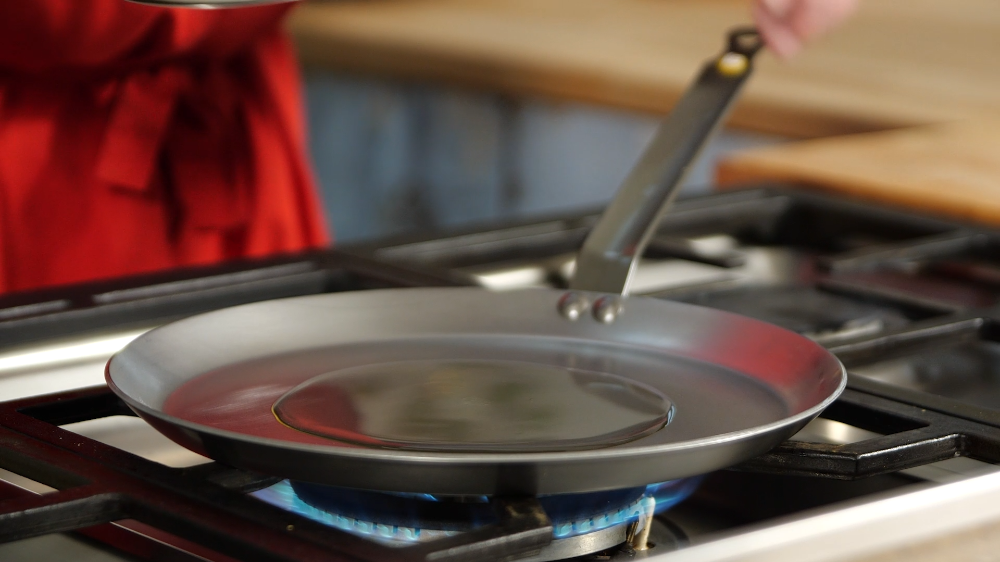
- Heat the Pan: Place the pan on medium-high heat until the oil begins to smoke lightly. This takes about 10 minutes. Alternatively, you can place it in an oven at 375°F for about an hour.
- Cool and Repeat if Needed: Let the pan cool down completely. If desired, repeat the oiling and heating steps to build a stronger seasoning layer.
Seasoning Is a Journey, Not a Chore
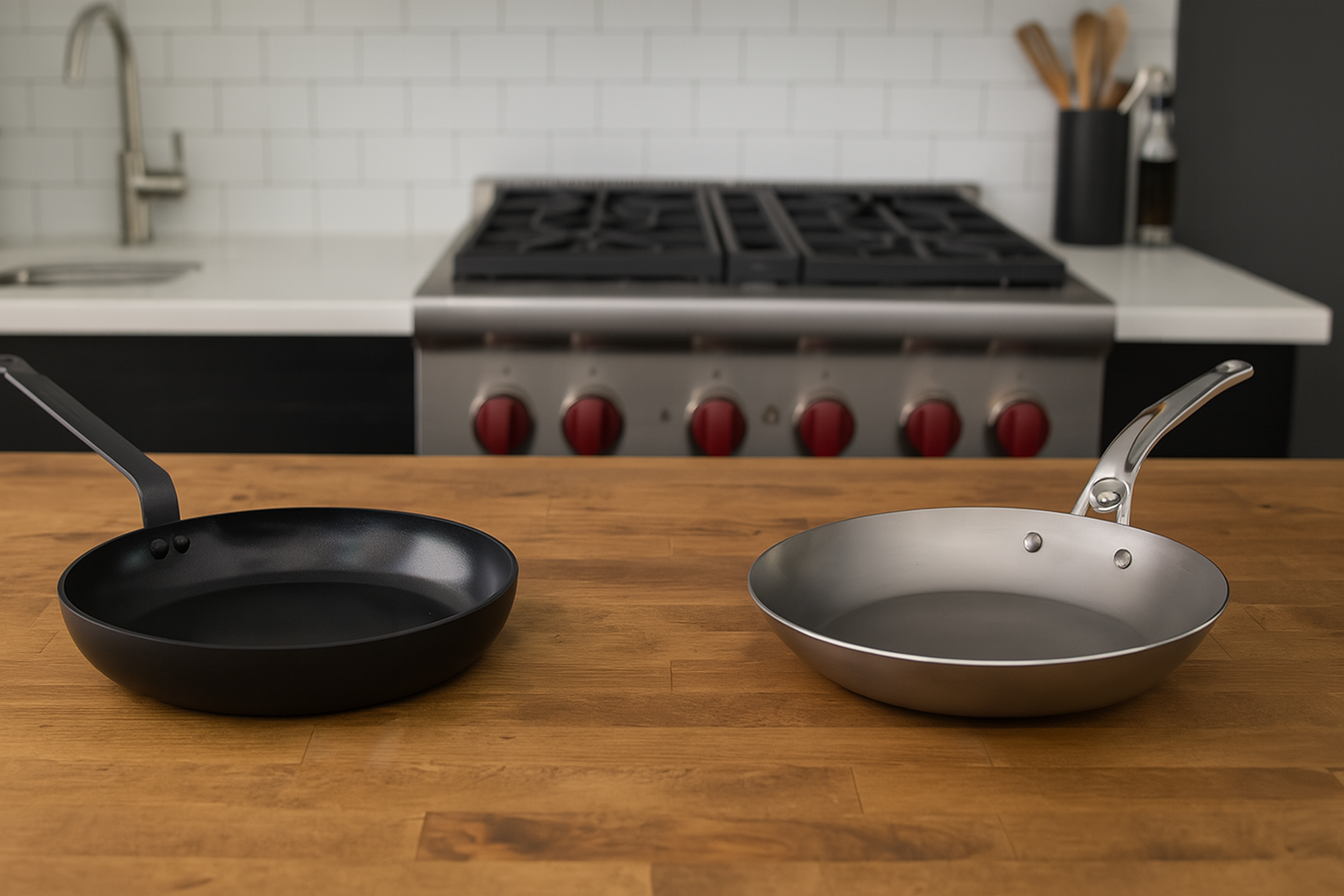
Yes, technically, seasoning your carbon steel pan is more “work” than cooking with a nonstick-coated pan. However, your de Buyer carbon steel pan performs much better than these nonstick pans. A de Buyer carbon steel pan also improves over time with consistent use and light maintenance.
Daily light oiling is enough to keep your pan in great shape. You can re-season only as needed, keeping your pan in optimal shape for years and years. Explore de Buyer’s carbon steel collection and enjoy cookware that gets better with every meal.



Recommended for You
-
MINERAL B PRO Carbon Steel Fry Pan
8"
9.5"
11"
12.5"
$110.00 USD - $175.00 USDRegular price $110.00Regular priceUnit price per$0.00Sale price $110.00 -
MINERAL B Classic Carbon Steel Fry Pan
8"
9.5"
10.25"
11"
12.5"
14"
$75.00 USD - $165.00 USDRegular price $75.00Regular priceUnit price per -
MINERAL B PRO Carbon Steel Omelette Pan
9.5"
11"
$130.00 USD - $145.00 USDRegular price $130.00Regular priceUnit price per -
Protective Sleeve for Pan Handle
Default Title
$12.50 USDRegular price $12.50Regular priceUnit price per -
Blue Carbon Steel Fry Pan
8"
9.5"
10.25"
11"
12.5"
$60.00 USD - $95.00 USDRegular price $60.00Regular priceUnit price per -
MINERAL B Carbon Steel Omelette Pan
8"
9.5"
11"
$85.00 USD - $120.00 USDRegular price $85.00Regular priceUnit price per -
MINERAL B Carbon Steel Crepe & Tortilla Pan
9.5"
10.25"
12"
$75.00 USD - $100.00 USDRegular price $75.00Regular priceUnit price per -
Blue Carbon Steel Crepe & Tortilla Pan
7"
8"
9.5"
$30.00 USD - $50.00 USDRegular price $30.00Regular priceUnit price per -
MINERAL B Carbon Steel Egg & Pancake Pan
4.75"
5.5"
$50.00 USD - $60.00 USDRegular price $50.00Regular priceUnit price per -
MINERAL B Carbon Steel Country Fry Pan
9.5"
11"
12.5"
$125.00 USD - $185.00 USDRegular price $125.00Regular priceUnit price per -
B BOIS Crepe Spatula
Default Title
$10.00 USDRegular price $10.00Regular priceUnit price per -
 Sold out
Blue Carbon Steel Baking Sheet
15.75" X 11.8"
23.6" X 15.75"
$45.00 USD - $55.00 USDRegular price $45.00Regular priceUnit price per


